


SERVICE EXCELLENCE AND PROFESSIONAL EXPECTATIONS: Focus on Estate Surveyors & Valuers
By
KUYE OLUSEGUN (2012)
Dip (Property Law), HND, MSc (Estate Mgt.), MSc (Housing Devt & Mgt), FNIVS, RSV
ABSTRACT
As our society continues to develop, many have come to realise the importance of real estate assets. This realisation has continually brought about great demand for the services of Estate Surveyors and Valuers – being the prominent professionals in the built environment. Thus, they are expected to always act in the best interest of their clients and the wider public. This expectation becomes even more pronounced considering the importance attached to real estate investment holdings by these clients. With the increased demand for the services of the Estate Surveyors and Valuers, it becomes essential that they pay premium attention to the manner and mode in which their professional services are delivered to these ever expectant clients. This paper takes a look at what clients would normally require of their respective Estate Surveyors/Valuers and the benefits derivable by living up to these clients’ professional service expectations considering the fact that few unscrupulous so-called professionals have given the rest a bad name due to their unethical practices and negligently rendered professional services.
1.0 INTRODUCTION
In every field of human endeavour, there is highly skilled manpower in the art of such endeavour. These skilled person(s) can be regarded as experts or professionals in such field. These professional are assumed to have gone through in-depth formal educational trainings, acquired practical trainings and tested on their level competence of the acclaimed expertise. However professionals worldwide still face many challenges from both the general public and their clients on issues bordering on their professional competence, conduct, and standard of practice in the course of performing what they profess to know. This phenomenon cuts across every profession.
In Nigeria, the level of practice of estate surveying and valuation currently is beset with lots of challenges. The quacks have made inroads into the practice mostly in the area of estate agency and property management. Howbeit, there is still in existence competent Estate Surveyors and Valuers who cannot jeopardize their quality of professional services in executing a brief; they therefore carry out their professional duties in accordance with the laid down guidelines which ultimately improve their reputations. Pursuant to this, this paper enumerated the many expectations of Estate Surveyors and Valuers (or simply Valuers) in the discharge of their professional duties to their respective clients.
2.0 PROFESSIONAL OBLIGATIONS, DUTIES AND RESPONSIBILITIES OF ESTATE SURVEYORS AND VALUERS
Profession is defined as an occupational body of person with specialized knowledge, skill, training, guided by professional ethics and engaged in a common calling or vocation accepted and recognized by law (Olusegun, 2011; Onifade & Olajide, 2007). As indicated by the American Institute of Real Estate Appraisal (1998), a profession is an organized vocation with highly competent membership, thoroughly honest and devoted to the ideals of doing the best work of which its members are capable regardless of compensation and personal references, provided however that such vocation is one which renders expert services to persons who are not expert and vitally in need of such services. In this regard, a professional consist of a limited or clearly marked group who are trained to perform certain functions better than their untrained fellow men. This being the case, it is suffice to state that there must be a clear line of demarcation between the standard set by the professionals and the quacks; otherwise the integrity of the professional will be at stake.
Obligation as used in the context of the paper refers to (Hornsby, 2001):
- the social force that binds one to the course of actions demanded by the force;
- the state of being obligated to do or pay something;
- a personal relations in which one is indebted for a service or favour; and
- a legal agreement specifying a payment or action and the penalty for failure to comply.
Duty is regarded as the work that one is obliged to perform for moral or legal reasons (Olusegun, 2011). This implies that if one has a duty, then he is obliged to perform it.
Responsibilities is defined as being responsible or accountable (Hornsby, 2001). In this regard, the person accountable is legally or morally liable for carrying out a duty, or for the care of something entrusted to his/her care, and/or where one may be blamed for loss or failure to perform the assigned task.
Professionals are expected to discharge their duties with care, competence and good ethical behaviour in order to promote and preserve the public trust in their profession. Moreover, most professional bodies has a code of conduct, ethics and standard of practice set to guide the activities of their members in the performance of their duties to their clients. This is so important because in most cases, the services rendered are always to those clients who may or may not be knowledgeable in the field of such practice. Thus the reason behind the establishment of the professional regulatory boards such as Estate Surveyors and Valuers Registration Board of Nigeria (ESVARBON), Architects Registration Council of Nigeria (ARCON) and Quantity Surveyors Registration Board of Nigeria (QSRBN) among others.
Estate Surveyors and Valuers are members of estate surveying profession charged with the responsibilities of managing interest on land and landed properties with the aim of obtaining an optimum returns and to further enhance the value of such properties. The duties of Estate Surveyors and Valuers is not only limited to his professional qualifications, but also to his morality and conditions lay down or the regulation guiding the practice of his profession. Ed Gandia (2009), in giving tips on successful professional-clients relationships indicated that the ability to land better and more lucrative briefs largely depend on the Valuer’s ability to meet with his clients’ service delivery expectations. The Table 1 below highlights some of the professional duties of Estate Surveyors and Valuers:
The Estate Surveyors and Valuers’ professional activities and performance should demonstrate strict adherence to the laid down ethical duties, obligations and responsibilities of professional practice. To this end, they should have the capacity to demonstrate the following traits:
- maintain the best interest of the client as the primary professional obligation
- carry out his/her professional duties and obligations with integrity and objectivity.
- demonstrate competence in rendering quality professional service to his/her clients.
- protect the confidentiality of his/her clients during the professional relationship unless:
- the client authorizes in writing the release of specified information, or
- the information is obligated to be released under the authority of a statute or an order of a court of competent jurisdiction
- not to conduct his/her professional services in a manner that discredits the profession or diminishes the public’s trust in the profession.
Table 1: Highlights of professional duties of Estate Surveyors and Valuers
Source: Field survey (2012)
|
Professional activity areas |
Professional duties of Estate Surveyors and Valuers |
|
Valuations |
Estate Surveyors and Valuers, in the course of carrying out valuation exercise should: · converts verbal instructions to writing · discuss extensively on the motive (purpose) behind the clients intention to carry out the exercise · give expert advice on the valuations · proffer alternatives option on how to go about the decision of the client · take extra care in description and detailing of the properties · use appropriate methods for assessment |
|
Property Management |
· Advise the client on the relevance and implications of the various landlord and tenant laws · Giving advise regularly on how to further improve the property and thus maximize returns · Exhibit good interpersonal relationship with the landlord and the tenants · Keep adequate records on every property being managed · Keeping to schedule of routine inspections and the reports sent to the client regularly · Proper account of service charge · Remission of client’s money as at when due · Show transparency in the course of the transactions · Strategies on the method or mode of rent collections for his/her clients’ properties |
|
Estate Agency |
· Advising the clients on the position of the property market · Negotiates to the best interest of the client · Properly documents the instructions/briefs · Properly advise on the method of sales e.g. private treaty, auction, tender, etc. · Show transparency in the course of the transactions |
|
Facilities Management |
· Take periodic inventory of the necessary facilities · Schedule how and when to carry out maintenance on installed equipment/facilities · Relate with the users of the facilities and enlighten them on how to optimize the |
|
|
use of the client’s facilities or equipment · Advise the client on the nature of the facilities as well as the type of maintenance to be carried out on them. |
|
Project Development and Management |
· Relate with the client concerned to determine his intentions · Carry-out feasibility and viability studies on the project on clients behalf · Offer advice to clients on alternative investment options which could be more profitable · Give expert advice on the best way to source for finance · Take time to explain lucidly to the client the nitty-gritty of the project execution · Draw up an agreement on terms of contract with the main contractor, sub- contractors and suppliers · Sensitize the client concerned on the future expectations on the project. |
|
Auctioneering |
· Determine the fair reserved price of the auctionable materials · Underwrite the fair reserved price · Organise the auctioning · Arrange bidders · Show transparency in the course of the transactions |
The quality of Estate Surveyors and Valuers cum their respective estate firms’ clientele would depend greatly on their ability to meet up with clients expectations. The location of their offices or number of years they have been in service is secondary compared to their level of efficiency and the ease with which clients can work with them. Underwood (2009) summarized the expectations of qualified professional Estate Surveyors and Valuers to include accountability, confidentiality, competence, good faith and full disclosure, and loyalty and obedience. Therefore, most clients would expect that their respective professional Estate Surveyors and Valuers to:
- act with integrity, fairness and honesty,
- deal fairly and openly with clients,
- disclose all relevant facts in a transaction,
- disclose conflicts of interest
- respect confidentiality,
- safeguard clients’ assets entrusted to them, and
- offer value added services (VAS).
These professional expectations are briefly discussed below:
a) Acting with integrity, fairness and honesty
Honesty is the act of being truthful while integrity is acting consistent with your words, values, and principles; it is keeping your word and walking your talk (Law Society, 2011). Honest practitioners tell the truth even when it means they will not secure a brief. They are willing to lose a brief because of their integrity and this they will do because they do not want to violate their word, their values, and their principles. Their willingness to lose deals is not an economic calculation; they are willing to lose deals because they are honest and because they have integrity. Even though they know that effectiveness in professional practice requires the effective management of outcomes and expectation, but they chose to maintain their integrity by not painting a picture that distorts the reality that their clients expectations (Finleyhospital.org, no date).
Furthermore, honesty is being scrupulous with regard to telling the truth and acting without stealing, fraud or breach of practice related laws, while “integrity” means the steadfast principled adherence to the code of business ethics (Law Society, 2011). Exhibiting these important virtues requires the demonstration of principled leadership and sound business ethics; shows consistency among principles, values and behaviours; and builds trust with others through personal authenticity and follows through on commitments. Honest professionals keep their word. They keep their promises, no matter how small. These seemingly small commitments include phone calls; follow up on briefs; sending the promised information; and other related professional commitments. This is integrity, and it is an internal force, not an external force, that commands them to walk their talk. For such professionals, truth must be told; and the higher the stakes, the more honesty and integrity become part of their business dealings in which they engage in. But when honesty and integrity are missing, it is rare that the lying professional will get a chance to compete. The reason for this is that, if the prospect suspects that the professional is lying, the prospect will simply move on. If the professional does not have integrity, if he/she do not appear to walk the talk by keeping his/her small promises and commitments, the prospect dismisses such professional from consideration (Iannarino, 2010).
When honesty is missing, the professional omits the truth. He/she covers up and hides factors that may prevent him/her from winning the briefs. He/she changes or alters the truth and leave out facts and considerations that do not serve him/her in winning a deal. When honesty and integrity are missing, such a professional provide a vision that he/she cannot bring to reality. He/she creates outcomes that are unlikely or impossible. He/she avoids discussing the challenges of implementation and execution, sometimes intentionally and sometimes because such professional is afraid it will prevent a deal. Thus, honesty and integrity are the defining characteristics of successful professionals – a critical part of the client’s evaluation and selection process.
Professional Estate Surveyors and Valuers possess unique skills and expertise that place them in an advantageous position over their clients. In a professional-client relationship, it is important for the clients to trust the Estate Surveyor/Valuer and to know that they have their best interest at heart. To build this trust, the Estate Surveyor/Valuer has an obligation to treat his client fairly and honestly. Thus, the observance of utmost honesty and integrity must underlie all activities of an Estate Surveyor/Valuer. Hence, a professional Estate Surveyor/Valuer is expected to provide sound consultancy services on real estate matters – an advice that his respective clients could rely on. They are not expected to wilfully or negligently misrepresent information or assert themselves as experts in area that they are not familiar with.
To some extent, the degree of Estate Surveyor/Valuer’s honesty and fairness would depend on how competent he/she is. Hence, Estate Surveyors and Valuers must have sufficient knowledge and skill to carry out transactions and other real estate activities as expected of them. Being honest would also require that Estate Surveyors and Valuers refer their clients to a third party if they are unable to adequately carry out a professional service’s request. For example, if a client asks a Valuer if a property has foundation damage, then the Valuer should request that the client get an independent inspection from a foundation specialist since he is not really licensed to make such inspections and evaluations. The situation where a Valuer fails to declare the real amount to be realized from a transaction or collect additional professional fees from a third party in the transaction are dishonest practices that should be avoided at all cost.
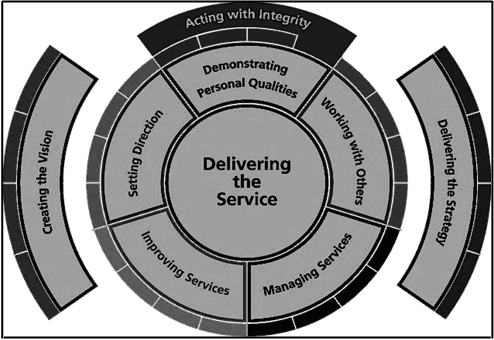
Figure 1: Service delivery with integrity
Source: NHS Leadership Academy (2012)
The apparent behaviours of Estate Surveyors and Valuers or professional estate firms that demonstrate honesty and integrity will:
- Communicate effectively with individuals, appreciating their social, cultural, religious and ethnic backgrounds and their age, gender and abilities
- Demonstrate apparent honesty and ethical behaviour in all their business transactions.
- Not steal, or assign to self-property or ideas of others or belonging to their clients.
- Ensure that company/professional standards are
- Be sincere and professional activities is characterized by truthful
- Keeps
- Take appropriate action if ethics and values are compromised.
- Uphold personal and professional ethics and values, taking into account the ethical values set by the Nigerian Institution of Estate Surveyors and Valuers (NIESV) and Estate Surveyors and Valuers Registration Board of Nigeria (ESVARBON) and respecting the culture, beliefs and abilities of clients
b) Dealing fairly and openly with clients
In Wikipedia (2012), client or customer is defined as “a recipient of goods or services in return for monetary or other valuable considerations”. It means the person for whom you act (i.e. your principal), and where the content permits, includes prospective and former clients. Dealing fairly and openly with clients will require that professional Estate Surveyors and Valuers and their respective estate firms will:
- operate to high standards and always ready to provide clients with good quality advice and a thoroughly professional service.
- continually aim to be the professional that will make clients happy to the extent that such existing clients will be happy to recommend their firms to friends and family members for business transactions.
- conduct business in an honest, fair, transparent and professional
- ensure that clients are provided with terms of engagement and incorporate details of complaint-handling procedures.
- deal with complaints in line with procedures that may be laid down by their respective firms in a quick, fair and efficient manner.
- give correct information and adequate explanation to enable clients to make informed decisions.
- endeavour to honour any promises made and deal with matters in a timely and efficient manner.
- agree an appropriate level of service with client, for example the type and frequency of communications and providing the required information in a clear and accessible form which is appropriate to the needs and circumstances of the client concerned.
- clearly explain their responsibilities and those of their clients without any form of ambiguity.
- give a realistic assessment of the likely selling, buying or rental price or associated cost of occupancy to the client based on market evidence and using best professional judgement.
- ensure that all advertisements and documentation about their practices and professional activities are clear, informative, legal, decent, honest and truthful.
- ensure that professional services are regularly benchmarked and evaluated in order to constantly improve their firms’ competitive edge in the marketplace.
- be open and honest about business products and services and telling clients what they want to know, including what their firms does and demonstrate social responsibility.
- ensure that if something goes wrong, their firms will acknowledge the problem and sincerely deal with it.
- listen to their clients as thus helping their firms improve the products and professional services being offered to them.
- where an Estate Surveyor/Valuer receives a financial benefit as a result of acting for a client, he/she should be honest enough to do any of the following:
- paying it to the client concerned;
- offsetting it against the collectible professional fees; or
- keeping it only where the Valuer can justify keeping it, and he/she have implicitly told the client the amount of the benefit and the client has agreed that the Valuer can keep it.
- ensure that disbursements included in the Valuer’s bill reflect the actual amount spent or to be spent on behalf of the client concerned;
Other constituent part of dealing fairly and openly with clients towards rendering professional services, qualified Estate Surveyors and Valuers will need to:
- act promptly, diligently and with due professional skill and care
- keep their professional and business knowledge up-to-date
- act within clearly established guidelines
- keep clients informed in a comprehensive and timely manner
- act in accordance with all the relevant professional guidelines as may applicable to the specific professional
c) Disclosure of all relevant facts
Estate Surveyors and Valuers are expected to always disclose all known relevant facts about a transaction and give their clients the opportunity to obtain independent advice. This means that the Valuers must tell their respective clients everything they know about a particular property including profits they may gain from any potential transaction on such property. For instance, if the Valuer shows a property to a potential buyer, knowing fully that the developer has gone bankrupt, then it behoves on the Valuer to disclose this piece of information to such buyer. Where a Valuer represents both the buyer (likely a third party) and seller (likely his client) in a transaction, both parties should be made aware of this fact and the possible monetary compensation (i.e. professional fees) which the Valuer would earn as a result of handling the transaction for both parties. The client has the right to know all the facts to enable such client make an informed decision (Underwood, 2009). The bottom line is that the Valuer should discharge his professional duties in such a situation with the sole purpose to protect the interest of both parties.
The duty of disclosure however, is owed to those with whom the Valuer has a contractual relationship (specifically, his client) with as he (the Valuer) is bound to protect the interest of his clients. As part of his duty to disclose all relevant facts, the Valuer should be aware of the legal implication of falling to disclose all known and relevant facts to his clients as the situation may demand. For example, if a Valuer knows that a property is in a flood plain, then he must disclose this information to his client as he could face legal actions if this fact is hidden from a client. This duty to disclose all relevant facts also require that the Valuer keep his clients informed in a comprehensive manner, and timely too, all issues concerning his particular interest in the property of his client.
d) Disclosure of conflicts of interest
In Business dictionary (2012), conflict of interest is defined as a situation that has the potential to undermine the impartiality of a person because of the possibility of a clash between the person’s self-interest and professional interest or public interest; or a situation in which a party’s responsibility to a second-party limits its ability to discharge its responsibility to a third- party. MacDonald, McDonald & Norman (2002) defined conflict of interest as a situation in which a person, such as a public official, an employee, or a professional, has a private or personal interest sufficient to appear to influence the objective exercise of his or her official duties. McDonald et al (op cit) goes on to explain the three elements of this definition as follows:
- A private or personal interest means something like a financial interest or concern for yourself (i.e. oneself), a friend, or a relative.
- An official duty arises from an office or position held.
- There must be an appearance that the personal interest influences the official duty by interfering with objective professional judgment.
The implication of this definition is that official duty is supposed to trump or take precedence over private or personal interest.
In Legal Dictionary (no date), conflict of interest is described as ‘the situation in which a public official or fiduciary who, contrary to the obligation and absolute duty to act for the benefit of the public or a designated individual, exploits the relationship for personal benefit, typically pecuniary’. In certain relationships, individuals or the general public place their trust and confidence in someone to act in their best interests. When an individual has the responsibility to represent another person – whether as an administrator, attorney, executor, government official, or trustee – a clash between professional obligations and personal interests arises if the individual tries to perform that duty while at the same time trying to achieve personal gain (Legal Dictionary, op cit). The appearance of a conflict of interest is present if there is a potential for the personal interests of an individual to clash with fiduciary duties, such as when a client has his or her attorney commence an action against a company in which the attorney is the majority stockholder. A member of a profession who has been involved in a conflict of interest might be subject to disciplinary proceedings before the body that granted permission to practice that profession.
Hill & Hill (2008) perception of conflict of interest is that of a situation in which a person has a duty to more than one person or organisation, but cannot do justice to the actual or potentially adverse interests of both parties. This includes when an individual’s personal interests or concerns are inconsistent with the best for a customer, or when a public official’s personal interests are contrary to his/her loyalty to public business. An attorney, an accountant, a business adviser or realtor cannot represent two parties in a dispute and must avoid even the appearance of conflict. He/she may not join with a client in business without making full disclosure of his/her potential conflicts; he/she must avoid commingling funds with the client, and never take a position adverse to the client (Hill & Hill, op cit).
As further buttressed in Wikipedia (2012), conflict of interest occurs when an individual or organisation is involved in multiple interests, one of which could possibly corrupt the motivation for an act in the other. The presence of a conflict of interest is independent from the execution of impropriety. Therefore, a conflict of interest can be discovered and voluntarily defused before any corruption occurs. A widely used definition is: “A conflict of interest is a set of circumstances that creates a risk that professional judgment or actions regarding a primary interest will be unduly influenced by a secondary interest” (Law Society, 2011). The Society defines primary interest and secondary interest as follows:
- Primary interest refers to the principal goals of the profession or activity, such as the protection of clients, the health of patients, the integrity of research, and the duties of public
- Secondary interest includes not only financial gain but also such motives as the desire for professional advancement and the wish to do favours for family and friends, but conflict of interest rules usually focus on financial relationships because they are relatively more objective, fungible, and quantifiable.
The secondary interests are not treated as wrong in themselves, but become objectionable when they are believed to have greater weight than the primary interests. The conflict in a conflict of interest exists whether or not a particular individual is actually influenced by the secondary interest. It exists if the circumstances are reasonably believed (on the basis of past experience and objective evidence) to create a risk that decisions may be unduly influenced by secondary interests ((Law Society, op cit).
More generally, conflicts of interest can be defined as any situation in which an individual or corporation (either private or governmental) is in a position to exploit a professional or official capacity in some way for their personal or corporate benefit. Depending upon the law or rules related to a particular organisation, the existence of a conflict of interest may not, in and of itself, be evidence of wrongdoing. In fact, for many professionals, it is virtually impossible to avoid having conflicts of interest from time to time. A conflict of interest can, however, become a legal matter, for example, when an individual tries (and/or succeeds in) influencing the outcome of a decision, for personal benefit. A conflict of interest exists even if no unethical or improper act results. The implications of conflict of interest are that it can:
- create an appearance of impropriety that can undermine confidence in the professional; and
- impair a professional’s ability to perform his or her duties and responsibilities objectively.
Types of conflicts of interests
As outlined in Wikipedia (2012), the following are the most common forms of conflicts of interests:
- Self-dealing, in which an official who controls an organisation causes it to enter into a transaction with the official, or with another organisation that benefits that particular In this case, the ‘official’ being described here is on both sides of the ‘deal’.
- Outside employment, in which the interests of one’s job contradict another.
- Family interests, in which a spouse, child, or other close relative is employed (or applies for employment) or where goods or services are purchased from such a relative or a firm controlled by a relative. For this reason, many employment applications ask if one is related to a current employee. If this is the case, the relative could then recuse (i.e. disqualify oneself) from any hiring decisions. Abuse of this type of conflict of interest is called nepotism.
- Gifts from friends who also do business with the person receiving the gifts. Such gifts may include non-tangible things of value such as transportation and lodging.
- Pump and dump, in which a stock broker who owns a security artificially inflates the price by “upgrading” it or spreading rumours, sells the security and adds short position, then “downgrades” the security or spreads negative rumours to push the price down.
Distinction between ‘own interest conflict’, ‘client conflict’ and ‘substantially common interest’
Conflicts of interests can arise between the professional and current clients (“own interest conflict“); and two or more current clients (“client conflict“). Conflict of interest means any situation where (Law Society, 2011; Davis & Stark, 2001):
- someone owe separate duties to act in the best interests of two or more clients in relation to the same or related matters, and those duties conflict, or there is a significant risk that those duties may conflict (a ‘client conflict’); or
- your duty to act in the best interests of any client in relation to a matter conflicts, or there is a significant risk that it may conflict, with your own interests in relation to that or a related matter (an ‘own interest conflict’).
- Own interest conflict means any situation where your duty to act in the best interest of any client in relation to a matter conflicts, or there is a significant risk that it may conflict, with your own interests in relation to that or a related matter.’
- Client conflict means any situation where you owe separate duties to act in the best interests of two or more clients in relation to the same or related matters, and those duties conflict, or there is significant risk that those duties may conflict.
- Substantially common interest means a situation where there is a clear common purpose in relation to any matter or a particular aspect of it between the clients and a strong consensus on how it is to be achieved and the client conflict is peripheral to this common purpose (Law Society, 2011). While this definition envisages situations of clear common purpose, this is not the same as situations where there is a common In situations when there is a client conflict and clients have a substantially common interest and you can act for both clients. It is highly essential to always keep a situation where you are acting for two or more clients under review. This includes deciding whether, at any time, a point has been reached where it would be untenable to continue to represent both clients without either of them being prejudiced. For example, if one of the conditions set out below is no longer being fulfilled or you cannot act in a fair manner, at that point, you must cease to act for one or both clients. The conditions are (Law Society, 2011):
- the professional in this circumstance reasonably belief that both clients understand the relevant issues and risks;
- the clients have given informed consent in writing;
- it is reasonable and expedient for you to act for both clients in their best interests;
- the benefits to act for both clients outweigh the risks
- both clients know and understand what you will be doing including any limitation to the brief being executed on their behalf.
No professional should act where there is a conflict, or a significant risk of conflict, between him and his clients. If there is a conflict, or a significant risk of a conflict, between two or more current clients, the professional must not act for all or both of them unless the matter falls within the scope described in the paragraph above. In deciding whether to act in these limited circumstances, the overriding consideration will be the best interests of each of the clients concerned.
Ways to mitigate conflicts of interests
The best way to handle conflicts of interests is to avoid them entirely. For example, someone elected to political office might sell all corporate stocks that they own before taking office, and resign from all corporate boards. Or that person could move their corporate stocks to a special trust, which would be authorized to buy and sell without disclosure to the political office holder; this is referred to as a “blind trust” (Law Society, 2011). With such a trust, since the politician does not know in which companies they have investments, there should be no temptation to act to their advantage. Other specific ways that professionals could mitigate conflict of interest are:
- Disclosure: Certain professionals are required either by rules related to their professional organisation, or by statute, to disclose any actual or potential conflicts of interest. In some instances, the failure to provide full disclosure is a crime, for example, EFCC requirement with regard to real estate financial dealings.
- Recusal: Those with a conflict of interest are expected to recuse themselves (i.e. abstain) from decisions where such a conflict exists. The imperative for recusal varies depending upon the circumstance and profession, either as common sense ethics, codified ethics, or by statute.
- Third-party evaluations: Third-party evaluations may also be used as proof that transactions were, in fact, fair (“arm’s-length”). For example, a company or firm that leases an office building owned by the Chief Executive Officer (CEO) might get an independent evaluation showing what the market rate is for such leases in the locality. This will effectively address any perceived conflict of interest that exists between the fiduciary duty of the CEO to the other stakeholders in the company by getting the lowest rent possible and the personal interest of that CEO (to maximize the rental income that the CEO might get from owning that office building.
e) Respecting confidentiality
As indicated by the Law Society (2011), protection of confidential information is a fundamental feature of the professionals’ relationship with clients. It exists as a concept both as a matter of law and as a matter of conduct. This duty continues despite the end of the retainer and even after the death of the client. It is important to distinguish the conduct duties from the concept of law known as legal professional privilege. Estate Surveyors and Valuers should always bear in mind that all members of the firm or in-house practice, including support staff, consultants and locums, owe a duty of confidentiality to every client of the firm.
The duty of confidentiality to all clients must be reconciled with the duty of disclosure to clients. This duty of disclosure is limited to information of which the Estate Surveyor/Valuer concerned is aware of, and such information is material to his/her client’s brief. But where the Estate Surveyor/Valuer cannot reconcile these two duties, then the protection of confidential information is paramount. Estate Surveyors and Valuers should not continue to act for clients for whom they cannot disclose material information; except in very limited circumstances, where safeguards are in place. Such situations often give rise to conflict of interests which is discussed in 2(d) above. The following principles apply in the context of confidentiality and disclosure (Law Society, 2011):
- keep the affairs of clients confidential unless disclosure is required or permitted by law or the client consents;
- any professional who is advising a client should ensure the client is aware of all information material to which the professional has personal knowledge, except when:
- the client gives specific informed consent to non-disclosure or a different standard of disclosure arises;
- there is evidence that serious physical or mental injury will be caused to a person(s) if the information is disclosed to the client;
- legal restrictions effectively prohibit you from passing the information to the client, such as the provisions in the money-laundering and anti-terrorism legislation;
- it is obvious that privileged documents have been mistakenly disclosed to you; or
- come into possession of information relating to state security or intelligence matters to which the Official Secrets Act applies;
- ensure that where professional duty of confidentiality to one client comes into conflict with the duty of disclosure to another client, the professional’s duty of confidentiality takes precedence;
- the professional must ensure that his systems and controls for identifying risks to clients’ confidentiality are appropriate to the size and complexity of the firm or in-house practice and the nature of the brief being This practice will enable such professional to properly assess all the relevant circumstances;
- comply with the law in respect of the professional’s fiduciary duties in relation to confidentiality and disclosure;
- only outsource services when the professional concerned is fully satisfied that the service provider has taken all appropriate steps to ensure that clients’ confidential information will be adequately protected;
- not acting for A where B is a client for whom the professional hold confidential information which is material to A unless the confidential information can be protected.
Confidentiality requires that Estate Surveyors and Valuers should not disclose any information relating to their clients’ transaction to anyone else without the clients’ consent. This means that Estate Surveyors and Valuers cannot disclose to a third party, their clients’ financial situation, or any other detail about the client without that particular client’s consent or approval. This duty however, does not apply to any generally known and/or observable material facts with respect to a client’s property, such as defects which Estate Surveyors and Valuers are obligated to disclose under the general honesty obligations owed to the public.
Closely related to duty of confidentiality is loyalty and obedience. Loyalty means that Estate Surveyors and Valuers should place the interest of their respective clients above theirs, except the law. Hence, Estate Surveyors and Valuers must show, in all their dealings that they are acting in the best interest of their respective clients. Obedience means that Estate Surveyors and Valuers must follow their clients’ lawful instructions as may have been jointly agreed upon.
f) Safeguarding clients’ assets
Estate Surveyors and Valuers and their firms owe the duty to act in the best interests of their respective clients. They should play their part in, for example, protecting money, documents or other property belonging to their clients which has been entrusted to them and their estate firms. Entrusting properties, usually worth millions of naira, to Estate Surveyors and Valuers in a country where trust is sometimes difficult to cultivate, behoves on them to be diligent in safeguarding the assets of their clients. Thus, it would be morally wrong and criminal for any Estate Surveyor/Valuer to dispose or transfer interest in a particular client’s property to a third party without the consent of the property owner. Sadly, many Estate Surveyors and Valuers have become victims of their own greed and have sold clients’ properties without the consent of the concerned property owners with severe legal consequences. These acts of misconduct and negligence have in most cases portrayed the profession in bad light.
Estate Surveyors and Valuers should be accountable in all their business activities with their respective clients. This means that Estate Surveyors and Valuers must keep accurate records of all funds they receive and that all transactions must comply with professional regulations/guidelines. Such account should be disclosed to their owners at agreed periods to forestall any misappropriation of funds or mishandling of assets entrusted to them (Estate Surveyors and Valuers Registration Board of Nigeria, no date).
g) Value added services (VAS)
The concept of ‘value’ is similar to that of service quality, which is determined by differential, often experience-linked, consumer perceptions. Evans (2002) defines value as the ratio of perceived benefit to perceived cost. On the other hand, Vandermere and Rada (1988); Dennett, Meson, Stone and Colgate (2000) defined VAS as the extended service in a product portfolio adds ‘value’ from the customer’s perspective. By this definition, it means that VAS are the extra services provided by firms in addition to their basic professional service and offered at no extra charge to the client. Thus, VAS is unsolicited additional services rendered by a professional in the course of discharging his professional duties.
VAS are offered free because every company wants to survive the keen competition prevailing in the service industry and also, to differentiate itself from its competitors. In other words, VAS is another way in which companies can gain competitive advantages in the market place. As indicated by (Escover, 1994), value-added functions contribute directly to client/customer satisfaction of the product or professional service. Even though the types of VAS provided in different firms are not identical, but the intent and purpose are the same, which is to gain client/customer satisfaction so as to survive and to achieve long term success (Gray & Maunders, 1980).
Estate Surveyors and Valuers, amidst their professional expertise should:
- follow up on business instructions or briefs.
- not to unduly delegate authorities especially those that require personal
- have undivided loyalty to their clients
- not divulge confidential information
- keep proper account of business
Undoubtedly, client’s satisfaction is very paramount in business relationship but this can only accomplished through the rendition of quality professional services by the thereby satisfying their clients expectations. In addition, the offer of quality service is the hallmark of forging ahead in a service competitive oriented world.
Aluko (2004) counselled that professionals should look for ways of improving professional services rather than spending their energies attempting to justify their respective positions. For Valuers, there is a well laid foundation which imposes a high standard of conduct and thus requires professionals to be frank and honest in all their dealings with their respective clients. As indicated by Tucker (2004), winning value-conscious customers requires professionals to lead the value-added services race in the industry. To this end, Tucker (op cit) outlined the following guidelines which a well-planned company could consider adopting in planning and implementing value added services:
- Do not confuse your definition of value with that of your customers.
- Figure out what business you’re really in
- Rethink your customer’s “highest need.
- Develop new ways to listen to your customers.
- Brainstorm unusual ways to add value.
- Figure out the lifespan of your proposed value-added service.
Below are some of the ways in which Estate Surveyors and Valuers can render ‘value added services’ to their respective clients:
- No undue delegation of duties in order to ensure promptness in service delivery
- Undivided loyalty to clients
- Always keeping clients adequately informed
- Keeping an appropriate and up-to-date account of clients
- With regard to offering value added services, networking follows 3-step/ process. These are (Easto, n.d.):
- Step1: Identify whatever services and markets that fall outside your niche market
- Step 2: Identify professionals who deliver the same standard of quality service that you provide to clients.
- Step 3: Enter into referral partner, type agreements with these professionals
- Helping clients to establish fair market values of their properties without charge
- Listings entered in Multiple Listing Service (MLS) could be made free of charge
- Free property bulletin advertisements free of charge
- Clients property listed on the company websites free of charge
- Sending occasional “Thank you for your patronage” note to clients
- Sending “Thank you” note to referrals of clients to the firm
- Buyers are entered into an auto-prospecting system that automatically sends them new listings as the desired properties come into the market
- Potential buyers pre-qualified
- All offers received are presented and discussed with clients
- Transaction negotiated with the other agents on clients behalf
- Yearly client appreciation party
- Free fax or courier service for clients
- Free notary service for clients
- Free ‘office conference room’ occasionally made available to clients to hold meetings (if such facility is available in the firm)
- Etcetera
Importance of value added service (VAS)
The importance of value added services cannot be over-emphasized, for instance In the case of Sinnock v Bangs (1952) reported in Richard (1964), a Surveyor was engaged to give a general opinion on a farm mansion, but was specifically told not to carry out a detailed survey. Based on the Surveyor’s favourable report, his client purchased the farm mansion and subsequently found a dry rot woodworm and settlement. The court held that a competent Surveyor should have been expected to discover the dry rot woodworm as he was asked to give a general opinion. It was noted that had it been that the Surveyor exercised a value added services by taking an extra care to alert his client when he discovered the dry rot woodworm, a value would have been attached to his professional exercise. Thus, VAS:
- tends to upgrade the standards of professionalism;
- boost the ego of the client;
- place the professionals in the position of high integrity; and
- gives the professionals edge against competition.
Without doubt, rendering a value added service is very important as many firms have made tremendous improvements in those areas by way of high clients’ patronage, clients’ retention, high profit, and high return on business investment. Thus, any professional estate firm that can demonstrate to potential clients that what the company provided is better, faster, more reliable, higher quality, more convenient and offers clients more value for their money wins (Maio, 2003). To this end, successful VAS that exceed clients’ expectations and increases their satisfaction would help generate those clients’ loyalty by way of repeated patronage and ensure that such firms have competitive advantages and thereby reinforce their capacity to survive financially and equally achieve long term business success.
3.0 THE REQUIRED QUALITIES OF ESTATE SURVEYORS AND VALUERS
An organisation or firm is known by the strength and quality of its employees and the work it does in the particular industry. In order to be successful in any profession, one should not only have ‘subject matter expertise’ but also personality, behaviour, decorum, mannerism, attitude, professional approach, and work efficiency. Failing which, irrespective of the self- professed knowledge, education and background, such professional will never be able to grow in that profession (University of Toronto, 2009; Theimer, 2008; Citehr.com, no date). This is also true for estate surveying and valuation profession. There are some minimum expectations from Estate Surveyors and Valuers in the way they carry themselves, behave, self-image and presentation that can either hamper or lift personality and professional graph.
Professional Estate Surveyors and Valuers are the most important treasure in the real estate sector of the economy and their roles is a blend of all the responsibilities related to project planning, execution, monitoring, and the ultimate effective management of the built environment. To be successful in meeting up with the demand which clients placed on them, they are required to possess the following qualities:
- Professionalism: Clients expect Estate Surveyors and Valuers with whom they do business to act professionally at all times – this entails clear and regular communications. Ordinarily, clients would like to deal with professionals who are pleasant on the phone, and who exhume enough confidence to ease any worry which the clients may Thus, Estate Surveyors and Valuers should exercise care/precaution in his speech, dressing, personal hygiene and general wellbeing. Acting in a professional manner, however, requires that the Valuer should be balanced in other to forestall certain clients from overstepping their boundaries.
- Compassion and efficient service delivery: Estate Surveyors and Valuers should all serve their clients with the utmost care and courtesy; listen carefully to them, avoid interruption when clients are talking to them and avoid rudeness; exceed the clients service expectations (value added service); always remember to thank them for their patronage irrespective of whether it is solicited or unsolicited professional service; and routinely practice an attitude of gratitude to every client.
- Respectful treatment: Estate Surveyors and Valuers should always endeavour to treat clients with the utmost respect, dignity, courtesy and confidentiality; listen thoughtfully, respond appropriately; respect their values, viewpoints and safeguard their confidentiality.
- Efficiency in time management: Estate Surveyors and Valuers are expected to be efficient in time management. They are expected to set time-frame for job execution and meet those All goals, all dreams, all activities, all commitments are achievable if there is a time frame set for them. Uncertainty, ambiguity, open-ended commitment, confusion – these are things that are not expected from any Estate Surveyor and Valuer.
- Adequate knowledge about real estate business and the industry generally: Estate Surveyors and Valuers should be aware of their respective strengths and weaknesses. They should know the business model of their clients’ real estate portfolio; it is equally important to know and understand their clients’ business goals and objectives with regard to the briefs or instruction received from them
- Love for number, data, figures, calculations, analysis and projections: In all their business dealings, Estate Surveyors and Valuers need to be more analytical, data oriented and good in calculations. They should be able to support their business ideas, strategies and policies with data. They should not be subjective and theory oriented so as to be able to convince their respective clients. Therefore, they should have the capacity to demonstrate with statistics and income profile of the real estate business idea being sold to their clients (com, no date). This way; they will be taken seriously as professionals not about to fritter away the client’s hard earned money.
- Enthusiasm to share, develop, coach and mentor: There is a common saying – “Knowledge is a wealth; the more you distribute/share the more you gain” (com, no date). In the estate surveying and valuation profession, we are privileged and are in a very unique position where we can help develop the up-coming Estate Surveyors and Valuers. We can help develop their career. We can help them in changing their perception and behavioural attitude or disposition towards the profession. We can groom them, so that they can be successful in their chosen career. The number of qualified and professionally competent associates that highly knowledgeable and experienced Estate Surveyors and Valuers are able to groom in their respective active professional career could be used to gauge their level of successes. And the more dexterity they are in doing this, the more their fame and good reputation will spread, earn them more respect and even more business dealings.
- Self-discipline: This is a common quality which every Estate Surveyor and Valuer should have, irrespective of his/her professional status. Estate Surveyors and Valuers need to set standards for other professionals to follow; thus, they need to benchmark their own Discipline in life is a must in order to grow, prosper and be truly successful.
- Trust worthy: This is very important quality for all Estate Surveyors and Valuers. They need to win the trust of their respective clients and then maintain and keep that trust. Cordial relationship with clients and employees is based on trust and honesty. If that trust is broken, it may never be regained. Clients are more relaxed and confident working with professionals that know what they are doing and always do what they say they will do. Estate Surveyors and Valuers should always be seen to be in control of situations. This will impact positively on the professional-client relationship. To be able to display this attribute, Estate Surveyors and Valuers should always act promptly with due skill and care, and diligent. This would also mean that Estate Surveyors and Valuers keep their professional knowledge up-to-date.
- Flexibility: No business deal plan is perfect. Delays might occur because someone required is unreachable or the required finance is not secured at the right time. A certain phase of project development or other related brief might get pushed back, or the scope of a real estate transaction might change considerably after the commencement of such business dealings – these things happen. Thus, it becomes imperative that clients are adequately briefed about any contingency that may arise and how they would be handled. Estate Surveyors and Valuers’ ability to handle such contingencies would go a long way to further cement the confidence which the client concerned may have in them.
- Service recovery: There may be occasions when clients expectations are not met, Estate Surveyors and Valuers should allow such clients lodge their complaints without interruption; apologize for the shortcomings; ask for their input in the way they would like to see the issue resolved; sincerely work toward an acceptable resolution; and follow through as may be promised.
4.0 SUGGESTIONS
To further enhance excellent professional service delivery, Estate Surveyors and Valuers Registration Board of Nigeria (ESVARBON) and the Nigerian Institution of Estate Surveyors and Valuers (NIESV) should appropriately sanction any Estate Surveyor and Valuer that contravenes any of their respectively established rules on professional practice. A scheme should be provided by the Institution whereby clients who have had their money mishandled by a Valuer could be reimbursed when all other avenues have been exhausted. Such a scheme is presently being run by the Royal Institution of Chartered Surveyors (RICS) in Britain; the scheme is called ‘’RICS Clients’ Money Protection Scheme’’. This scheme is designed to give some protection to the public by making funds available for their reimbursement in cases where their money has been misappropriated by firms being regulated by RICS and the firms are unable to make full restitution.
Estate Surveyors and Valuers on their part should always endeavour to act promptly, diligently and with due care when executing their respective clients’ briefs. They should keep their professional and business knowledge up-to-date and act within the ambits of statutory provisions and clearly established professional guidelines. Furthermore, it is important for Estate Surveyors and Valuers to keep their respective clients informed in a comprehensive and timely manner about those clients’ interests.
5.0 CONCLUSION
Having clearly identified the expected professional duties of Estate Surveyors and Valuers such as being accountable, confidential, competent, loyal, diligent and reasonable, qualified Estate Surveyors and Valuers should endeavour to live up to their required professional expectations. Doing so will give Estate Surveyors and Valuers and their respective firms an edge over their competitors and also lead to their attracting quality clients which in turn would mean better and more lucrative briefs. Furthermore, Estate Surveyors and Valuers should live up to their professional callings; endeavour to always conform to the code of conduct of the estate surveying and valuation profession; and add value to their professional duties. These ways, they will be adequately positioned to elevate the standards of professional practice, clearly distinguish themselves from the charlatans and quacks that currently pervade the real estate agency market and earn the respect of the general public.
REFERENCES
Aluko, B.T. (2004). Market data for better valuation/pricing: The holy grail of the valuation profession. Journal of the Estate Surveyors and Valuers, Lagos, Vol. 27, No1, March 2004, pp. 54-63
American Institute of Real Estate Appraisal (1998). The dictionary of real estate appraisal. (4th ed.). Chicago: Appraisal Institute.
Ascot Surveying Services (no date). Why use an RICS Surveyor? Retrieved on September 28, 2012 from http://www.ascotsurveyingservices.co.uk/
Burton, W. C. (2007). Burton’s legal thesaurus (4th ed.). The McGraw-Hill Companies, Inc. Business dictionary (2012). Conflict of interest. WebFinance, Inc. Retrieved on September 10, 2012 from http://www.businessdictionary.com/definition/conflict-of- interest.html#ixzz2DBAHR0DX
Businessethics.ca (no date). Definition: Conflict of interest. Retrieved on August 27, 2012 from http://www.businessethics.ca/definitions/conflict-of-interest.html
Citehr.com (no date). Nine qualities all human resources professionals should have.
Retrieved on September 28, 2012 from http://www.citehr.com/60424-nine-qualities-all- hr-professionals-should-have.html
Clark, M. (1980). How to avoid negligence in valuation. Chartered Surveyors Journal of RICS, London, Vol. 112, No7, February 1980, pp. 240-244
Davis, M., Stark, A. (2001). Conflict of interest in the professions. Oxford: Oxford University Press.
Dennett, C.; Ineson, E. M.; Stone, G. J. & Colgate, M. (2000). Pre-bookable services in the chartered airline industry: Increasing satisfaction through differentiation. The Service Industries Journal, London: Apr 2000, Vol. 20, Iss. 2, pg. 82.
Dunham, R., Grube, J., & Castaneda, M. (1994). Organizational commitment: The utility of an integrative definition. Journal of Applied Psychology, 79, 370-380.
Easto, L (no date). Value added real estate services yield great payoffs. Retrieved on January 7, 2011 from http://www.real-estate-marketing-link.info/ value_added_real_estate.html
EM Gray & Co. Limited (no date). Treating clients fairly. Retrieved on September 28, 2012 from http://www.emgray.uk.com/
Escover, J. L. (1 994). The value measure. Management Decision, London, 1994, Vol. 32, Iss 1, p.12.
Estate Surveyors and Valuers Registration Board of Nigeria (no date). Rules and regulations for the practice of estate surveying and valuation.
Evans, G. (2002). Measuring and managing customer value. London: Work Study, vol. 51, Iss.2/3, p. 134
Finleyhospital.org (no date). Service excellence and professional expectations. Retrieved on August 8, 2012 from http://www.finleyhospital.org/documents/documents/ServiceExcellence.pdf
Fusionuv.com (no date). Code of business ethics. Retrieved on September 25, 2012 from http://www.fusionuv.com/
Gandia. E. (2009). Promoting your business, working with clients. Retrieved on 15th of April 2012 from http://budurl.com/ffh9... accessed
Gray, S. & Maunders, K. (1980). Value added reporting: Uses and measurement. Association of Certified Accountants.
Hans, P. P. (2012). Real Estate watch: How to deal with tricks property agents’ play. Living Media India Limited. Retrieved on October 23, 2012 from http://m.businesstoday.in/story/real-estate-property-buy-selling-precautions- brokers/1/184734.html
Hill, G. N. & Hill, K. T. (2008). Conflict of interest. West’s Encyclopaedia of American Law (2nd ed.). The Gale Group, Inc.
Hornsby, S. A. (2001). Oxford advanced learners dictionary of current English. London: Oxford University Press.
Iannarino, S. A. (2010). Honesty and integrity are table stakes (and more). Retrieved on September 18, 2012 from http://thesalesblog.com/blog/2010/03/22/honesty-and- integrity-are-table-stakes-and-more/
Keith Sanger Associates (no date). Why a Chartered Surveyor? Retrieved on July 17, 2012 from http://www.sangersurveyors.co.uk/ chartered/index.htm
Law Society (2011). Conflict of interests. Retrieved on September 10, 2012 from http://www.law society.org.uk/advice/practice-notes/conflict-of-interests/
Legal-dictionary (2012). What is conflict of interest? Farlex, Inc. Retrieved on September 10, 2012 from http://legal-dictionary.thefreedictionary.com /conflict+of+interest
Legal-dictionary (no date). Conflict of interest. Retrieved on September 10, 2012 from http://legal-dictionary.thefreedictionary.com/conflict+of+ interest”>conflict of interest
MacDonald, C., McDonald, M. & Norman, W. (2002). Charitable conflicts of interest. Journal of Business Ethics, 39:1-2, 67-74, August 2002. (p.68)
Maio, M. (2003). What makes you different? National Driller, Vol. 24, Iss. 12, p.82
Meyer, J. & Allen, N. (1991). A three-component conceptualization of organizational commitment.
Human Resource Management Review, 1(1), 61-89.
NAR: Real Estate Resources (2009). Code of ethics and standard of practice. Retrieved on August 15, 2012 from http://www.realtor.org/realtors.
NHS Leadership Academy (2012). Acting with integrity. Retrieved on May 10, 2012 from http://www.leadershipacademy.nhs.uk/discover/leadership-framework/demonstrating- personal-qualities/acting-with-integrity/
NIESV Constitution. Retrieved on February 28, 2009 from http://www.niesv.org/download.php.
Olusegun, K. (2011). Estate office practice. Lagos: Adro Dadar Heritage Company Limited. Onifade, K. & Olajide, S. (2007). Professional practice of estate management in Nigeria. Ado-
Ekiti: Adedayo Printing (Nig.) Ltd.
Richard, B. (1964). All the modern cases of negligence. London: Sweet and Maxwell.
Royal Institution of Chartered Surveyors (no date). The RICS clients’ money protection scheme. Retrieved on April 15, 2012 from http://www.rics. org/moneyscheme.
The American Heritage® Dictionary of Business Terms (2010). Conflict of interest business definition Houghton Mifflin Harcourt Publishing Company.
The Law Society (2012). Solicitors’ Regulation Authority handbook. Retrieved on September 10, 2012 from http://www.sra.org.uk/solicitors/ handbook.
Theimer, K. (2008). What are reasonable expectations of professional courtesy? Retrieved on September 10, 2012 from http://www.archivesnext. com/?p=134
Tucker, R. B (2004). Adding value profitability. The American Salesman Burlington, Vol. 49, Iss. 2, p.24-27.
Underwood, A. (2009). Duties and responsibility of a good realtor. Retrieved on April 15, 2012 from http://en.worldpress.com/tag/realtor-duties.
University of Toronto (2009). Expectations for professional behaviour. Factor-Inwentash Faculty of Social Work. Retrieved on September 10, 2012 from http://www.socialwork.utoronto.ca/ students/policy/expectations.htm
Vandermerwe, S. & Rada, J. (1988). Servitization of business: Adding value by adding service. European Management Journal, Vol.6, No.4, pp.7-t 1.
Wikipedia (2012). Client. Retrieved on September 25, 2012 from http://en.wikipedia.org/wiki/Client
Wikipedia (2012). Conflict of interest. Wikipedia, the free encyclopaedia. Retrieved on September 25, 2012 from http://en.wikipedia.org/wiki/Conflict_of_interest

